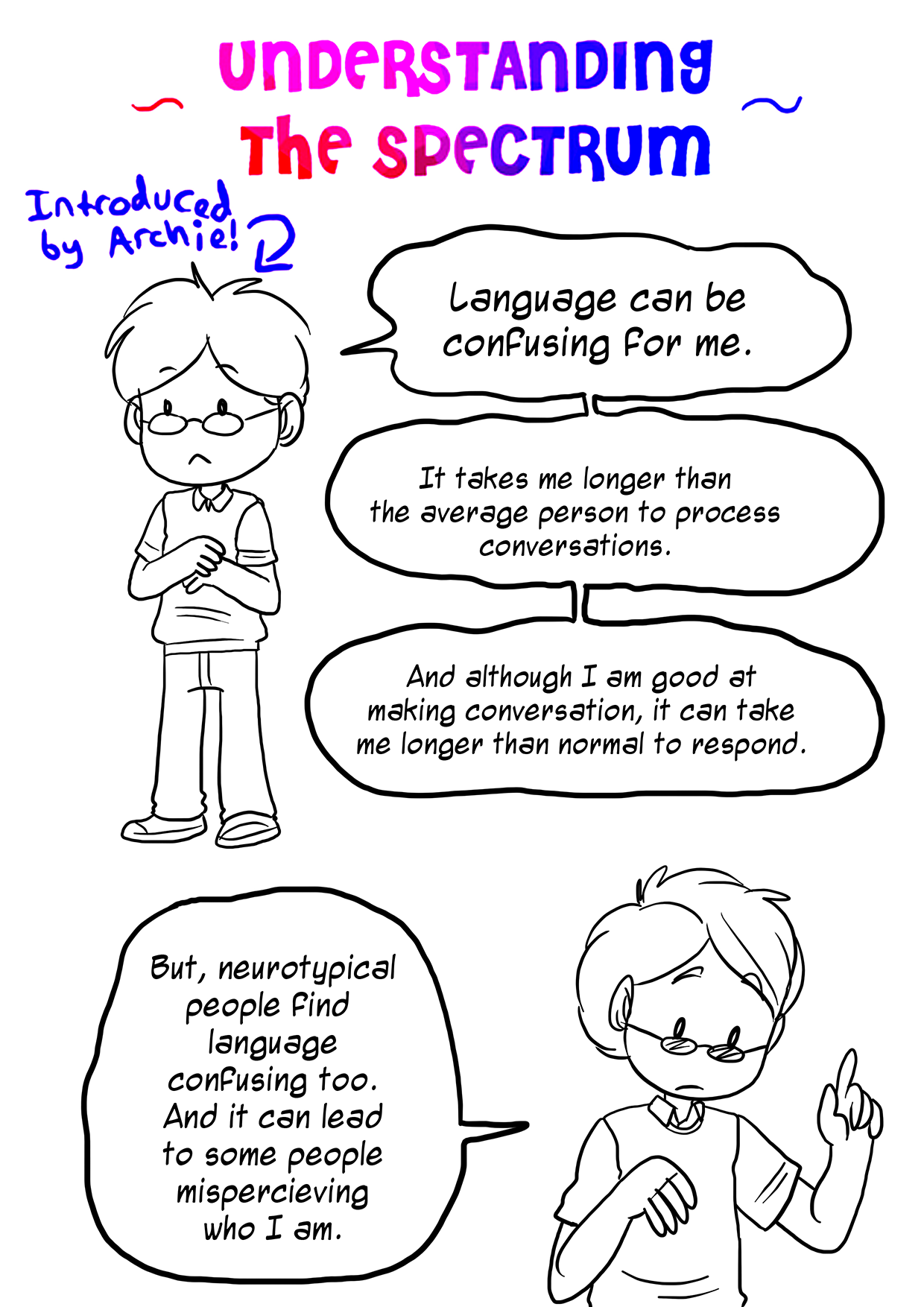
We’re always on the lookout for interesting and fun ways of explaining autism, and we wanted to share a good one we’ve found. Bristol-based artist Rebecca Burgess has produced a great cartoon strip explaining autism and the non-linear nature of the autism spectrum – she has kindly made it available to us as a download (click on the image):
For more information on Rebecca’s work, visit her website and follow her on Twitter.
“I am quirky, I am different, but I am not less”
By Andy Marsh
Chief Constable, Avon & Somerset Constabulary
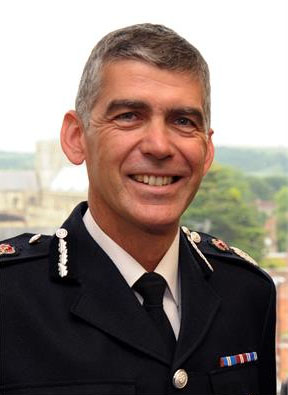 Monday 26th March marks the start of World Autism Awareness Week. Last year around this time, Sgt Adam O’Loughlin wrote about his own diagnosis and experience of autism; in his blog, Adam decried those people who call it a disorder. He said there’s nothing wrong with him, but explained that autism is a lifelong developmental disability that affects how a person experiences the world around them and how they communicate and relate to others. He said: “I am quirky, I am different, but I am not less”.
The blog prompted lots of comments: people welcomed Adam’s honesty and openness, and shared their own experiences or those of family and friends. Since then, Adam’s become our first Force Lead for autism, and the National Police Autism Association’s Communications Officer.
It’s a shocking fact that 86% of autistic people are unemployed, but thankfully neurodiversity – encompassing conditions such as autism, dyslexia, dyspraxia and ADHD – is recognised now in definitions of diversity and inclusion. Understanding and being more aware of the condition of autism is important: it helps us recognise and understand the condition in others, including detainees. In the last year, Avon & Somerset Constabulary has carried out a review of the risk assessment for detainees. In the past they haven’t been asked if they’ve ever been diagnosed with autism. Asking them about their mental health isn’t enough – many people with autism would say no to a learning disability and mental health question; autism is neither and so the condition goes undisclosed.
So once again we’re leading the way nationally. From now on anyone booked into custody in Avon & Somerset who discloses they’re autistic, or who a custody officer suspects of being autistic, will be treated as vulnerable and an appropriate adult will be called to give them support. Work is underway nationally to change the risk assessment to include this additional question, but we’re not waiting for that.
It’s this kind of determination and innovative thinking that’s helped us achieve a steady improvement in the outcomes of our HMIC PEEL inspections over the last couple of years. At the time of writing, HMIC are due to publish the results of their Effectiveness Inspection; they reviewed our effectiveness in investigating crime and reducing re-offending; at protecting those who are vulnerable from harm, and supporting victims; and at tackling serious organised crime. The results are embargoed until tomorrow so I can’t give you any details other than to say we were found to be GOOD in all three categories, an improvement on last year when we were only good in two of the three.
I’ve been quite open about my ambition for us to become an outstanding Force. But it’s much more than just an HMIC finding: we already have many outstanding people doing an outstanding job – like Adam and many, many more Avon & Somerset officers, staff and volunteers. Last week at the Bristol Awards I heard some remarkable stories from our own people and members of the general public. Lots of Royal Humane Society awards for lifesaving and bravery and two Crown Court Commendations, both for investigations into historic sex offences, one dating back to when I was still at school. And of course in Wiltshire your support, and support from 14 other Forces, has been a very public demonstration of our outstanding British police service. To all those of you who have been involved, cancelling rest days to be there when you were needed, thank you again.
I know resources are tight and a lack of them sometimes limit our ability to do everything we’d like to. All we can do is aim to be the best we can be. And that’s good enough for me; if that’s our shared aim then I don’t think there’s any doubt of reaching my – our – ambition to be outstanding.
This blog was originally published on the Avon & Somerset Constabulary intranet – reproduced here with kind permission of Avon & Somerset Constabulary
Guest Blog: Permission to be me
The following blog was sent to us by a serving police Sergeant – the officer’s identity has been withheld due to family confidentiality.
My wife and I have always joked about my quirkiness. “I’m sure you have some form of autism”, she would say to me. Although it was said in jest, deep down we both knew it was a distinct possibility that I was on the autism spectrum.
After my daughter was born my wife and I started to see some distinct similarities between her social interactions and mine, so we continued to wonder.
 In 2016 I was successful in getting an interview for promotion, but unfortunately missed out by a small margin. When I received my interview feedback I was convinced that I had been wronged in the marking of my answers. In fact, it turned out that I had interpreted some of the questions too literally and so didn’t answer what was actually being asked of me. It took me several months of deconstructing my interview in my mind to realise that I had fallen foul of a common trait of the autism spectrum – literal translation. Was this my fault or a process design flaw I wondered?
I began reading up on autism, searching the internet for more information to gain a greater understanding. The more I looked, the more boxes I began to tick. I came across an online questionnaire, often used as an early diagnostic tool. I was really pleased with my high score on the questionnaire, as I always enjoyed a good exam result, however the score was an indicator of a high likelihood of autism spectrum condition (ASC).
All evidence indicated a likely ASC diagnosis, but I questioned what good it would be in my thirties to have such a diagnosis? After all, ASC cannot be treated, it is merely a ‘different’ or ‘non-typical’ way of interacting with and processing the world around you; something I have lived with all of my life, though few people have ever known.
A diagnosis now at this stage in life would not change anything.
However, I read a few articles explaining diagnosis in adulthood can be a good thing, helping to provide self-acceptance for who you are and for those around you to begin to understand your quirks. It could also help to seek reasonable adjustments at work.
I went to my GP, who had to seek funding for an adult assessment, but within around 10 weeks I had my diagnosis. It was confirmed that I was autistic, following several questionnaires and a full day assessment with two psychologists.
The assessment process was uncomfortable, reliving uncomfortable parts of my childhood and teens in some detail; my difficulties forming friendships, spending large periods of time on my own and the challenges I encountered in suppressing my quirks to the people around me.
Now, I am not so much coming to terms with my diagnosis, but more like coming to terms with being ‘me’. I am now making less excuses for the way I am, embracing my quirks and being true to who I really am – rather than what I think everyone else expects me to be.
It isn’t easy being, thinking and doing things in ways that are unfamiliar to most other people, but with acceptance also comes the realisation that my differences are the root of my strengths.
Diagnosis hasn’t ‘fixed’ me, but it has released me to finally be myself.