Looking after the square pegs

Are we approaching workplace stress the wrong way?

by John Nelson
Chair, National Police Autism Association

The last couple of years have seen an increased recognition of the importance of staff welfare within policing. As a service, we are now far more aware of the effects of stress: in years gone by, an officer struggling with the after-effects of a fatality or other traumatic incident might be offered nothing more than a stiff drink in the bar after work; today, Forces offer trauma risk management (TRiM) and access to counselling as standard. The launch of the Oscar Kilo wellbeing portal in 2017 and the Police Federation’s successful ‘Protect the Protectors’ campaign reflect a more enlightened approach to wellbeing within the emergency services.

The focus on dealing with traumatic events tends to overlook another source of stress, and one that particularly affects staff with a neurodiverse condition such as autism, ADHD or dyslexia: day-to-day wellbeing. As a support group, we are often contacted by officers and staff who, for one reason or another, are not having a happy time at work; these reasons usually boil down to basic needs not being met. Despite our improved understanding of wellbeing, the police service is still something of a ‘one size fits all’ culture: as a warranted officer, you’re expected to work anywhere, in any core role, and perform to the same high standard. (Police staff are typically limited to their chosen role but may still be subject to widely varying working environments.) This approach doesn’t always work for everyone, and it especially doesn’t work for staff with hidden conditions and disabilities.

Take the station report writing room, for example – the place where officers start and finish each shift and get case files and paperwork done. With the move to larger police stations, officers are now likely to find themselves working in open-plan offices – sharing facilities with 20 or 30 colleagues at a time is not uncommon. Open-plan offices tend to be noisy – whilst some people might find a certain amount of background noise invigorating and most are are able to block out distractions, staff with sensory sensitivities typical of autism spectrum conditions may find constant background noise and interruptions intolerable and a significant barrier to performance. A supervisor may be sympathetic and willing to consider a reasonable adjustment such as a change of location or finding an officer a quiet room to work in; however all too often such accommodations can be seen as a nuisance (“Everyone else manages, why can’t you?”) or refused outright. What happens next varies, but is never good: if the officer’s performance dips below the minimum, performance management measures may be implemented; this is usually the point at which the officer takes sick leave suffering from stress and we are approached for help. Insisting on reasonable adjustments can sometimes lead to a stand-off between the officer, Occupational Health and local management, the latter being under no obligation to follow recommendations made by healthcare professionals. Even if line managers are willing to accommodate a change in working environment, such accommodations are sometimes made grudgingly, which will negatively impact on the officer’s career development. Or the officer may struggle on, managing to keep their performance above the minimum but coming into work unhappy and resentful every day – hardly a good place to be, and with obvious negative effects on resilience and long-term health.

Another factor which is arguably true for everyone, and especially to neurodiverse staff, is of square pegs not fitting into round holes. People with neurodiverse conditions tend to excel in certain roles and environments and struggle with others – for instance, an officer on the autism spectrum may thrive in a neighbourhoods role, where the focus is on solo working and long-term problem-solving; an officer with ADHD on the other hand may find the constant stimulation of a response role a better fit. Unfortunately there is no pathway for such career preferences to be accommodated, outside of recognised specialisations such as CID; if an officer is unlucky enough to find themselves in the ‘wrong hole’, the only way out may be through requesting a move as a reasonable adjustment, which may only be granted as a means of getting the officer back to work from sick leave. Some managers are more accommodating than others, but this is hardly ideal – our position is that this vital facet of wellbeing should not be a spin of the roulette wheel.

Along with culture, a barrier to wellbeing is austerity – with officers at all ranks being expected to achieve more with less, it is all to easy to view an officer who struggles as a ‘problem child’ (a term that unfortunately is still bandied about in policing circles). Managing resources, performance and sickness tends to fall to local District Commanders – these mid-level managers spend a good deal of time juggling team numbers on their office whiteboards, and with staffing levels constantly at minimum or below minimum, it’s easy to see why an officer requesting a transfer to different location or role would not be seen favourably as a potential high performer. The ‘immoveable object’ behind all of this is the Equality Act: employment law does not recognise that providing reasonable adjustments to disabled staff may ‘upset the numbers’ or be too costly. The ultimate result of getting this wrong is the Force being taken to an employment tribunal – a failure for everyone involved, regardless of outcome.

It’s hard to talk about the importance of wellbeing without looking at what can happen if it’s neglected, but I would like to focus on the positives. Neurodiverse officers and staff who overcome the odds to find their niche can be capable of great things – take for example Detective Inspector Warren Hines, Chief Inspector Nigel Colston and Inspector Kaj Bartlett, senior officers who have forged careers around their strengths arising from autism and ADHD. One of the most satisfying aspects of my role as NPAA Chair is being able to point potential neurodivergent officers to the Media Centre page on our website, where they be can be inspired to turn what many view as a negative into a positive.

I’m often asked what changes I would like to see in the future. An important change for our members would be for officers of all ranks to understand the importance of day-to-day wellbeing rather than just managing trauma, and to recognise that a small expenditure on effort, time and money can make a big difference in getting the best from our staff and giving our best to the public. ∎
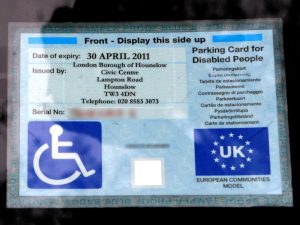
People with hidden disabilities to benefit from Blue Badges

Following a consultation exercise in January 2018, the Department of Transport has announced that from 2019, hidden disabilities such as autism will be included in the Blue Badge scheme. This gives individuals and carers access to disabled parking spaces, which can make a big difference in leading an independent life.

The previous Blue Badge scheme prioritised physical disabilities, with eligibility of autism and other hidden conditions being open to interpretation by local authorities. The new scheme explicitly includes those who:

  • cannot undertake a journey without there being a risk of serious harm to their health or safety or that of any other person (such as young children with autism)
  • cannot undertake a journey without it causing them very considerable psychological distress

Further resources:

Respecting neurodiversity: Interactions between autistic people and public services

Dr Katie Maras is Lecturer and Dr Jade Norris is Research Associate in the University of Bath’s Department of Psychology. They are both members of the Centre for Applied Autism Research team

Two-way communication forms the bedrock of the provision of most public services and must be effective in order for all individuals to receive appropriate access to care, services, employment, and justice; services should be accessible and delivered in a way that respects the differing needs of the individual. However, society is shaped for neurotypical people and largely excludes those who think differently, despite the fact that neurologically diverse people – from those with autism to ADHD to dyslexia – constitute a significant proportion of the population. In this blog we present autism as a case study for how the critical points of interaction between individuals and public services could be better designed to respect neurodiversity, taking the criminal justice system, healthcare, and employment interviews as exemplar contexts.

Autism is a lifelong neurodevelopmental disorder that affects a person’s interests, behaviours, and how they communicate and interact with those around them. It is currently estimated that around 1 in 68 people are autistic, with the recorded incidence rising sharply in recent decades. Autism impacts all areas of life and costs the UK economy at least £32bn in lost earnings, interventions, care, and support for people with the condition. A major factor in this cost is that autism is lifelong and can affect independent living and employment – despite possessing a range of valuable skills, 85% of autistic people do not work full time. Furthermore, autistic people are more likely to have interactions with the police (despite no evidence that they commit crimes at higher rates than the general population), and are more likely to have co-occurring physical and mental health issues, meaning that they are more likely to require health and social care provision.

Compounding these issues are core differences in social communication coupled with specific memory difficulties, which can make even everyday social interactions difficult and highly anxiety-provoking for autistic individuals. These difficulties are therefore particularly exacerbated in formal, ‘high stakes’ interview contexts such as police interviews, personal health consultations, and when being interviewed for a job. Performance in occupational interviews is a crucial determinant of employment prospects, yet social, cognitive, and communication difficulties mean that autistic people are often unable to perform to the best of their abilities in interviews. Differences in introspection and social communication are also likely to make relaying relevant information to healthcare providers difficult, unless these differences are appropriately supported. Our research has shown how current police interviewing models are ineffective in supporting autistic witnesses to provide ‘best evidence’ because they were developed based on neurotypical memory retrieval and communication styles.

We know, for example, that autistic people have difficulties in recalling personally experienced specific episodes from the past under ‘free recall’ conditions. However the use of open-ended and episodic-based questions is ubiquitous within healthcare, the criminal justice system, and employment interviews (for example – “Tell me what you saw yesterday”; “Tell me about the fall”; “Recall an example of when you were faced with…?”; “What would you do in X situation?”).

Social insight is also crucial in these contexts: one has to ‘read between the lines’ to determine what an interviewer wants to know, which so often isn’t explicitly stated in the question. Successful job interviewees are those who are proficient at conveying job-relevant skills and aptitudes such as being hard working, dependable, reliable, able to work independently or as part of a team, and having the relevant skills and experience for the job. For an autistic interviewee, however, inferring that this type of information is required can be difficult; interview questions may be interpreted very literally, and they may be overly honest in their answers (Q: “What is it you like about this firm?”; A: “Lunch!”).

Indeed, a job interview is often principally a test of recall and neurotypical social competence – both of which can be difficult for autistic people, making it harder for them to demonstrate the required skills for the job role in question. Similar problems are encountered in criminal justice system questions that are posed as statements which do not explicitly ask for a response or justification (“So you knew Joe wasn’t going to be there, yet you went ahead anyway”), and in healthcare consultations literal interpretation of questions can again be a major barrier. Most neurotypical people will provide relevant information that goes beyond a direct answer to a question (Q: “Have you vomited?”; A: “No… but I feel very sick”), whereas an autistic person may just provide a literal answer the question (“No”), which can lead to incomplete communication of symptoms and missed or delayed diagnoses. Indeed, rates of almost every type of physical and mental health problem are significantly raised in autism in comparison with non-autistic people, and recent evidence suggests that the way in which people are asked about their symptoms has a significant effect on diagnosis. For example, autistic people are far more likely to receive a depression diagnosis when a standardised semi-structured interview is used compared to other less formal methods.

Crucially, providing more explicit instructions regarding what is required and narrowing the parameters can effectively elicit recall of a similar level of accuracy and completeness to non-autistic individuals. Although free recall is widely accepted in both psychology and policing as the gold standard, to produce the most accurate, uncontaminated witness recall, autistic people may need more guided and focused retrieval from the outset to: (a) support their memory retrieval; (b) reduce implicit social demands regarding what is relevant for recall; and (c) minimise cognitive load and demands on ‘executive resources’ (crucial cognitive abilities that would help us to remember, plan, and monitor our answer to an interview question). To improve real-life outcomes for autistic people, the challenge lies in optimising the environment to exploit their relative strengths whilst also supporting their difficulties (for example, through reasonable adjustments such as removing lighting causing sensory issues, reduced use of open-plan working environments, etc). Accordingly, the focus of our current ESRC-funded research is to provide a systematic examination of factors that both help and hinder autistic people in reporting information in order to develop detailed guidance for how service providers can best facilitate optimal two-way communication when interacting with autistic people.

While there is an accumulating evidence base for adaptations that need to be made to support autistic people, employers and public services need to be sufficiently informed and administratively enabled to adopt these recommendations. Supporting autistic people to be economically active and appropriately engaged in service use not only improves quality of life for autistic people, and relatedly reduces unemployment rates as well as health and police spending (with better quality evidence resulting in more efficient investigations), but also brings a range of valuable but under-appreciated skills to society – from attention to detail to analytical problem solving and creative insights. Indeed, companies such as Auticon, JPMorgan, and Microsoft who have neurodiversity initiatives have reported a range of benefits as a result, from greater creativity to rises in profits. These developments are part of a broader shift from viewing neurodiversity as weakness (medical model of disability) towards differences and even strengths (social model of disability). Historically, disability was seen as a deficit in which policy solutions involved viewing the individual as a patient rather than as an active participator. The 2009 Autism Act was a landmark move from focusing on medical ‘treatment’ to enabling autistic people to enjoy ‘fulfilling lives’, reflecting more of a rights-based understanding. It is the only disability-specific legislation in the UK, introduced in recognition of the uniquely complex difficulties that arise when autistic individuals are engaged with public services. The most recent related government strategy for adults with autism in England, ‘Think Autism‘, identifies a number of priority challenges for action including making adjustments within the criminal justice system and employment, and meeting the health needs of autistic people.

Given that individual difficulties are tricky to spot, a universal approach to giving information in accessible ways (alongside the standard format) is strongly recommended, and removing barriers for autistic individuals can benefit everyone. Indeed, specific issues and differences faced by autistic people can also be experienced by non-autistic people, such as those with ADHD, dyslexia, anxiety, depression, social difficulties, and sensory issues. Traditional initiatives surrounding diversity focus on categorisations of individuals into groups such as gender, ethnicity, or religious affiliation, with policy solutions that apply broad-brush interventions for categorical differences. It has been questioned, however, whether such policies effectively address diversity as a full continuum, including dimensions of diversity that are neither immediately obvious nor inherently collective – such as neurodiversity. Ultimately, the task we are faced with is to develop an enabling environment for neurodiverse populations with effective systems for all. Neurodiversity is a strength – it provides new insight and unique skill sets in employment, which together with improving access to healthcare and justice make a powerful economic case for creating more inclusive policies around communication. ∎


This blog was originally published on the University of Bath website – it is reproduced here with kind permission of the authors