by Ross Campbell
Superintendent | Warwickshire Police
As I reflect on my 10 year anniversary as a diagnosed person with dyslexia – a topsy-turvy journey over which I’ve battled with my inner self and outside influences – I remember that I used to be a lone voice.
I have always been an open advocate for dyslexia and disability, but I never quite felt that my voice was fully heard. It wasn’t fully understood as a disability and my challenges were never properly understood, despite my openness to talk about them. I have blogged snippets for many years, slowly increasing my following, and I know I have influenced and inspired people slowly, but its incredibly humbling when a stranger comes up to me, or reaches out to me and says that I have had a positive impact on their lives, or their neurodiversity, or I am asked to give a talk. This is why I do it.
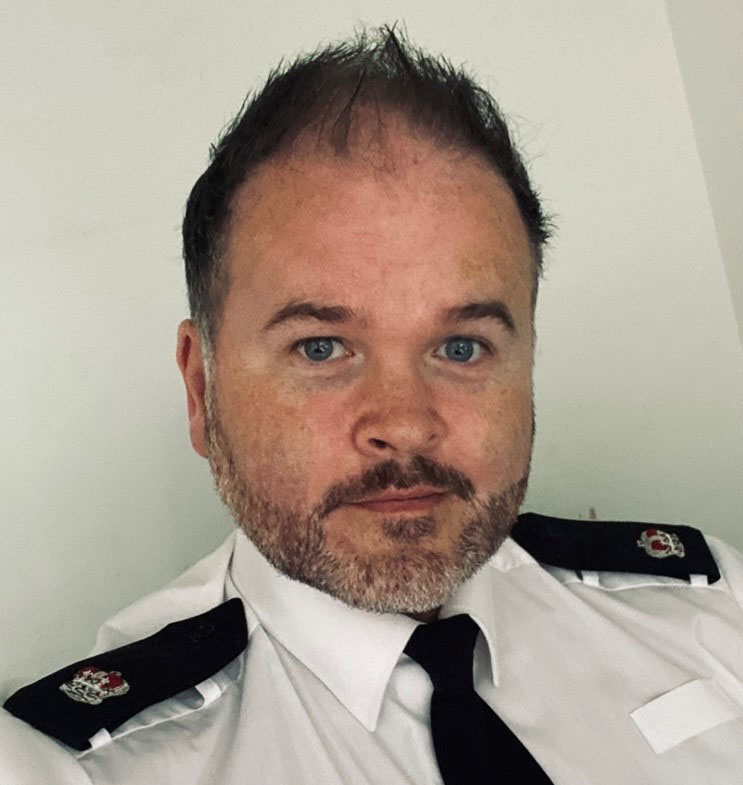
I’ve told probably over 1,000 people my story now – in person, through conferences and online sessions, and to countless others who have engaged with my dyslexia-focused social media page.
I have educated those who have asked me when it was I ‘caught’ dyslexia… “Is it contagious?” Or “How can ‘someone like you do a job like this’?”… and many others. This just shows, in 2023, how far we still have to go. I have people stumble over language around me when I talk about disability; quite frankly, so long as its not discriminatory or offensive, then I really don’t mind how people broach it. It’s the fact that we are talking about it that matters, and long may that continue.
At the time when I began my journey, I was by far one of the most senior people in policing talking about my dyslexia and showing that our amazing difference is not something that will hold you back. Now it is incredible to see so many others sharing their stories, of all ranks and grades right up to Chief Officer. This is absolutely amazing to see and I take my hat off to them, because I know how difficult it is to take that first step. When people see rank, they see success. We as dyslexics don’t see that a lot of the time: we see frustration, challenge, disadvantage, an un-level playing field, failure and buckets of self-criticism. For example, I have sat 10 promotion boards to get to Superintendent.
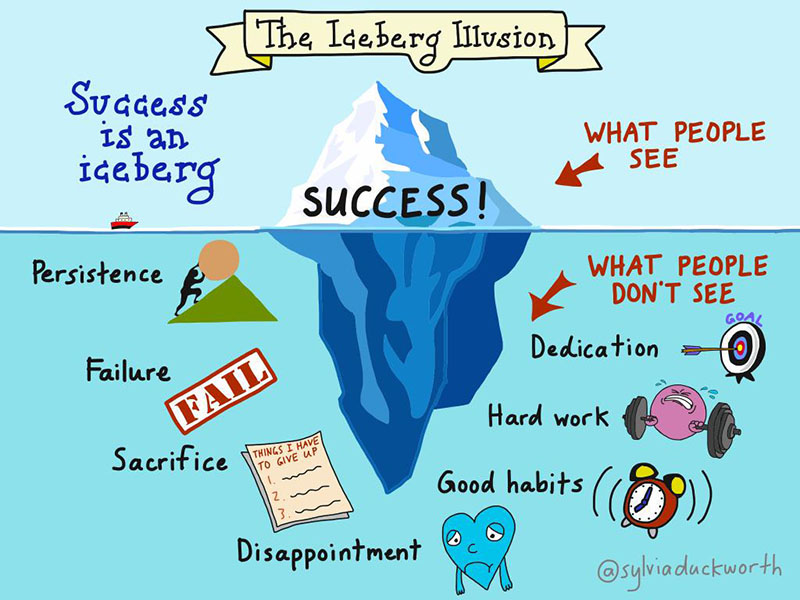
What portrays this visually is the brilliant image by Sylvia Duckworth, a Canadian teacher who depicts the ‘Iceberg effect’. For me, nothing could be closer to the truth.
When I left school, I did so with no qualifications. Since my diagnosis 10 years ago, I have been to university and achieved a first class honours degree, a master’s degree whereby I got a distinction in my final research project, and I have just started a PhD, for which I obtained a funded scholarship having presented my vision for future research in my specialist field. I have also managed to get promoted from Sergeant to Superintendent. The dyslexic kid done good! How have I done this? Well nothing has changed – my brain is no different, I just now understand how it works. I have an intimate understanding neurodiversity and psychology (through my academia) and I understand what my brain needs in order to work more effectively. It’s a bit like rewiring a fused short circuit.
Let’s go back to the iceberg for one moment. Above the water: wow, look at what I have achieved! – which of course I am absolutely proud of. But I have also spent a considerable amount of time beneath the surface, which is very difficult to come up from because it has a tendency to keep dragging you back down, like a strong current as you try and swim against the tide. On bad days you are trying to do that blindfolded, in a storm. Mental wellbeing is incredibly important for neurodivergent people: mental health can very quickly become a viscous cycle of self-destruction, because neurodiversity at its core can impact on emotion and behaviour.
There are lots of methods that can assist you with keeping your brain regulated with the positivity it needs, such as mindfulness apps, coaching and mentoring, and reading (or listening to audiobooks) on the subject. Also important is the right support in your workplace, the right awareness of neurodiversity, workplace adjustments, and of course, a fundamental shift in culture.
I have, during my time, thankfully been able to influence change in process and policy both locally and nationally; and in my Force, I have a great Chief Officer team who really do ‘get it’. We revolutionised reasonable adjustments for promotion processes in particular, and were very early adopters of policy and practice I now see embedded nationally. That said, there is still a long way to go, and I know we don’t get it right every time. Every time we don’t, that impacts on a person, just like you and me. So we need to listen, learn and continue to share experiences.
I am seeing the increasing number of support groups appearing for neurodiversity both locally and nationally, and there are some really exciting things on the horizon. There are also working groups actively leading and influencing change nationally, across all of the key policing stakeholders and partnerships.
My next adventure is navigating the pathway to an ADHD diagnosis. Again, I have read so many stories around people’s experiences and reflections as they have embarked and progressed on this journey, that I now set out myself with less fear that I may have felt without them. I will write about this as it progresses.
My once lone voice is now echoing off the walls – it’s amazing to see, and long may it continue. We all need to keep encouraging people to speak up because their voice isn’t a lone one; and together, as a community we can continue to do great things. ∎