by Fiona Laskaris
Campaigner for the introduction of Christopher’s Law to improve the law around mental capacity assessments
I have been campaigning for nearly a decade to close a loophole in the law to prevent the misuse of the presumption of capacity in the Mental Capacity Act 2005 which can leave vulnerable adults at risk of harm.
My autistic son Christopher was exploited and murdered in his own home in 2016 by a violent drug dealer, just released from prison on licence, who pretended to be his friend. This man had gained access to his home at a time when he had no functioning front door.
Despite repeatedly flagging serious concerns about Christopher’s capacity to make key decisions in his life which were leaving him at risk of harm, I was repeatedly dismissed. The authorities failed to assess his capacity to make these decisions and instead assumed he had capacity to make them due to the presumption of capacity in the MCA.
A mental capacity assessment establishes whether people have the ability to make decisions about their own safety and wellbeing, and helps determine what support they may need. If my concerns had been listened to, and proper capacity assessments had been carried out, I believe Christopher would still be alive today.
I’m determined to stop other families from going through the pain and trauma that my family has. ‘Christopher’s Law’ would introduce a duty to assess an individual’s decision-making capacity where credible doubts are raised, including by family members.
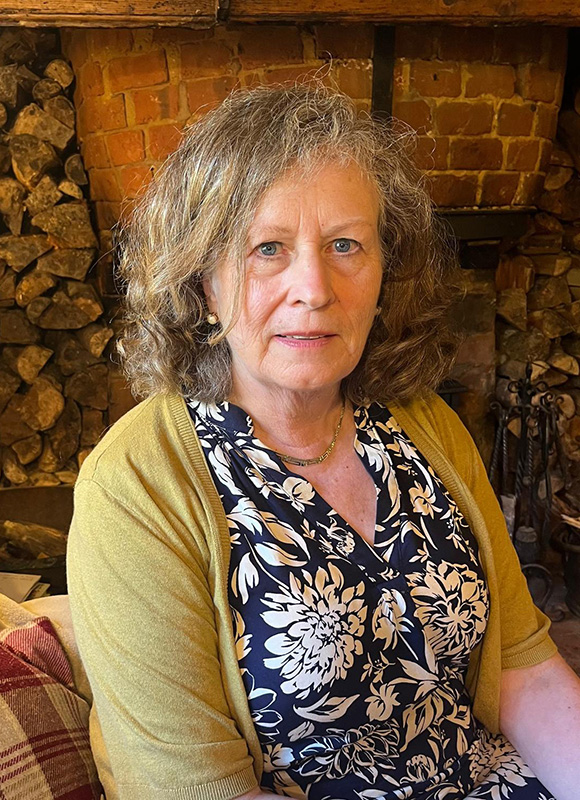
Liberal Democrat MP Chris Coghlan, who presented Christopher’s Law to parliament in July, has been urging the government to support it. He paid an emotional tribute to my refusal to give up:
“If we do succeed, it will be above all because of the voices of the broken but unbeaten parents, like Fiona, demanding change.”
The Mental Capacity Act was introduced in 2005 in a bid to minimise the number of vulnerable adults being detained unreasonably and indefinitely, and to give them more autonomy over their own care. The Act states that everyone must be assumed to have capacity to make a decision unless it’s established that they lack capacity to make it.
In England and Wales there is a legal presumption of mental capacity, and therefore every person should be treated as having capacity to make a decision unless it is proven otherwise. A diagnosis of autism does not mean that a person must lack capacity and cannot make their own decisions.
While many autistic adults have full capacity, it should be recognised that autism can in some circumstances contribute to a lack of decision-making capacity, particularly where executive functioning, information processing or the ability to weigh up risks is affected.
If there is any doubt about whether someone has capacity to make a specific decision, a formal capacity assessment should always be carried out by an appropriately qualified professional. A properly conducted assessment ensures that any limitations in decision making are identified and accurately understood so that the correct legal safeguards and support can be put into place.
Sadly, research has confirmed that often mental capacity assessments are not carried out when they should be, or are not carried out effectively – in particular on autistic people, adults with learning disabilities or those with severe mental health conditions, such as bipolar and schizophrenia. This leaves the presumption of capacity as the default position when capacity is not assessed, rather than the starting point when considering capacity, as it was intended to be.
Assessing capacity correctly is vitally important. Someone who is assessed as lacking capacity may be denied their right to make a specific decision. Equally, if a person lacks capacity to make specific decisions, that person might make decisions they do not really understand. This could cause harm or put the person at risk. This is why it’s so important to carry out an assessment when a person’s capacity is in doubt.
Vulnerable people should be given the time and support needed to make safe and informed decisions about their own lives, rather than just assuming they fully understand an important decision and the likely consequences of making it.
“Losing a child is the worst thing that can happen to anyone, but I think a preventable death is the very worst”
Fiona Laskaris
Three MPs – the former health secretary Sir Jeremy Hunt (Conservative), Chris Coghlan (Liberal Democrat) and Jake Richards (Labour) – are supporting the introduction of Christopher’s Law. They, along with the National Autistic Society, agree that the current system is failing autistic adults like Christopher, as well as other adults with learning disabilities and mental health illnesses, at times with catastrophic consequences. There are potentially hundreds of preventable deaths per year due to this issue, with recent research by King’s College London finding the MCA was not followed in a quarter of the deaths of autistic people and those with learning disabilities in 2022 alone.
I’m also pushing for the government to pursue work on a Vulnerable Adults Bill, so the authorities have power to intervene in cases where vulnerable people are being groomed and exploited but deemed to have capacity. The Bill would give the authorities legal power to intervene in these situations.
The ‘From All Walks of Life’ art exhibition is the first visual representation of the campaign. It is the end result of various different art workshops with organisations that support vulnerable adults. I wanted the art project to be as diverse as possible, and it’s really heartwarming to see the results of all the hard work. I’m delighted with this wider support for the campaign.
November 4th is the tenth anniversary of Christopher’s death. It’s therefore very special to me that the exhibition is happening in that week, and that Christopher’s life isn’t forgotten.
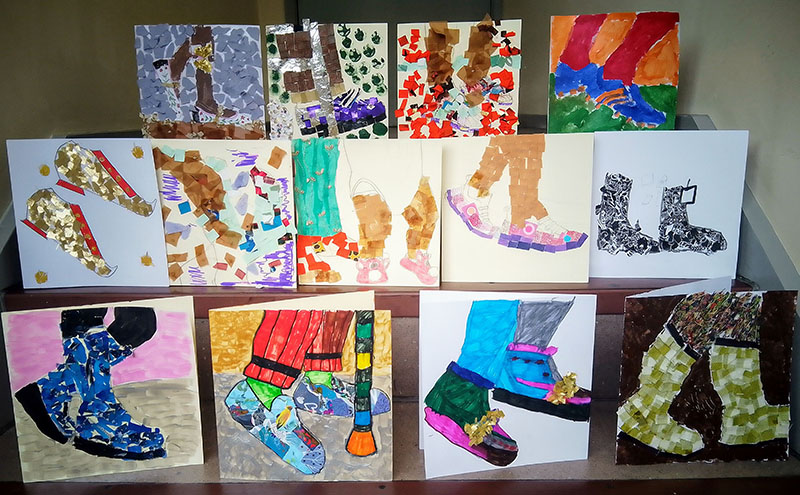
‘From All Walks of Life’ is a mixed media art project on 8″ x 8″ square cards. It is intended to be fun and enjoyable, so no-one feels they have to produce works of art! The project though does represent the seriousness of the campaign, with men’s and women’s shoes walking, marching, running and wheeling in the same direction to show unity – a shared journey and experiences. The aim of moving forward to the next part of your life is to make change happen.
Any age, nationality, culture and background can be affected by disability hate crime and mate crime. It is hoped that an image of a long path of all types of footwear will stay in people’s minds as a reminder that collective action will make life-changing experiences. ∎
‘From All Walks of Life’ is on show at St Peter’s Church, Cambridge Road, Harrogate, from Monday 2nd to Saturday 7th November 2026