Category Archives: Reblog

“I’m a Superintendent, but I spend all day as an actor”

Nottinghamshire Police Superintendent Paul Burrows is Disability Lead for the Police Superintendents’ Association. To mark Disability Pride Month, Supt Burrows shares his thoughts and experiences of neurodivergence in the workplace.

I’m very open about the personal challenges I face when it comes to my neurodivergence. My message is however a positive one, in that being neurodivergent does give me different abilities and indeed a different outlook on life that can if nothing else makes me laugh at the oddities I perceive. Additionally, networking with others who are neurodivergent has opened friendships that I haven’t had before, with people who understand where I am coming from without me having to explain myself or the way I think.

So, to me. I have a diagnosis of dyslexia and am currently going through the formal process of being assessed for being autistic and having ADHD.
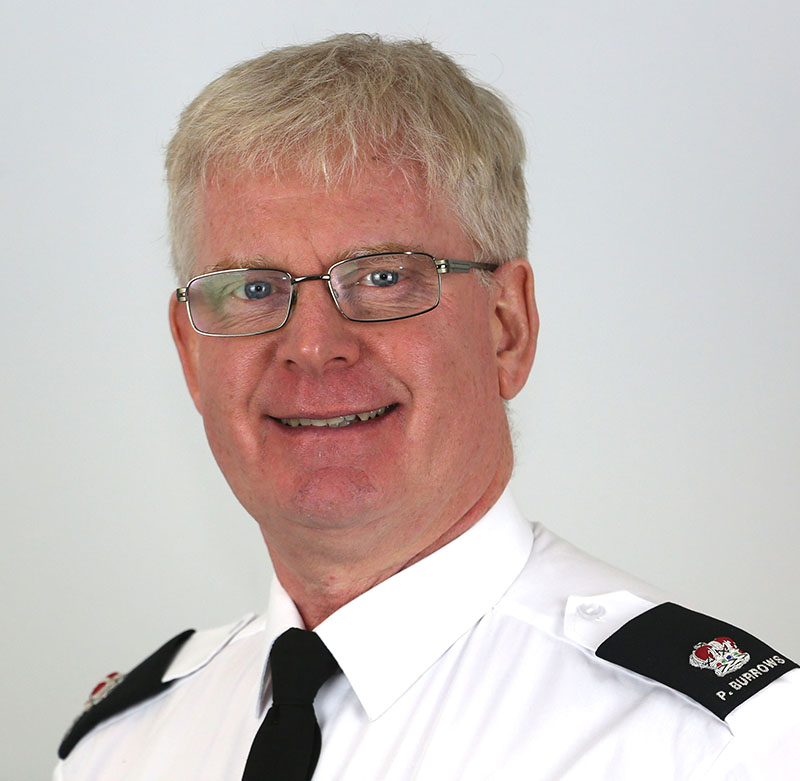
Supt Paul Burrows

I say this because I believe I am one of hundreds within the police workforce living with these conditions, but unfortunately, I am probably one of the few that feels able to share this. Not enough people have a medical diagnosis to help understand why life can feel harder than it should, and as a profession I don’t believe we ask enough questions to better understand and support our people. If we don’t understand our people, how can we begin to understand the needs of our communities?

To start, we have a huge untapped resource out there – in the people we haven’t proactively recruited into policing, and in the potential within our own people which is not being harnessed because we are not utilising the best of their abilities. Now, knowing who I am, I can look at my work and my life differently, which has been a real positive for both me and all those around me, I like to think.

Before I became a police officer, much of my career focus was around disability and inclusion. From volunteering to working for charities and a local council, I found a passion for creating opportunities for those with disabilities.

Because of this, I was 30 before I joined the police – a ‘late’ joiner compared to many.

My belief is that policing is a career to which many people who are neurodivergent are attracted, as research suggests conditions like dyslexia align with a strong sense of empathy. There is also a perception that policing will attract those who are autistic, because of the way our brains work as problem-solvers.

For me, each day at work is utterly exhausting, but probably for different reasons than you’d expect. Yes, I’m extremely busy as we all are, but I also find that throughout the day, I ‘act’. I am not being my true self. I am incredibly uncomfortable in busy social situations, I dislike physical contact so I hate shaking people’s hands, I find making conversation with people I don’t know difficult, and long meetings are impossibly difficult for me. I therefore must be someone I’m not, to engage in all these ‘normal’ parts of working life that are expected in our workplaces.

I am lucky to have a number of adjustments to my working life that support my specific needs. My office is purposely dim in lighting with no distractions whatsoever on the walls, I have software on my computer to help me with typing, and I have started to tell my colleagues when I’ve reached ‘burnout’ in meetings. Let’s face it – who wouldn’t want shorter meetings?

I cannot imagine what it would be like to have none of this understanding and to carry on with my work hiding or not even being aware of all of this. However, that is the reality for many of our colleagues, and it should not be.

Within Nottinghamshire Police, my own Force, we screen all new starters for dyslexia. We are finding indicatively about 20% have scores that are suggestive of dyslexia. This is a significant percentage and something which must be key to our understanding of our workforce and our responsibility to support them.

I believe that the work we have already done and the results we have achieved in-Force, have made the working environment for neurodivergent people better – and in some cases, much better – enabling them to flourish. There are real positives in doing this work and continuing to do it.

Thankfully, we are talking more and more about neurodivergent conditions such as these, and when I carry out training within my Force, I regularly hear and see people ‘reverse diagnosing’ themselves because they can relate so closely to the challenges of autism, ADHD or dyslexia they hear about in others. In my view we should be screening for autism and ADHD as standard in the same way we screen for dyslexia – however, post-screening support if there were a positive indication is a thorny issue we are trying to resolve.

Our workforce has undergone the biggest wholesale change in its history in the last two years, as we’ve recruited 20,000 new officers into the service at one time. It’s critical that we work to understand the protected characteristics of these colleagues, how we support those who have a visible or invisible disability, and how we support those who are going through a diagnosis, or are in need of one.

Currently, many of our fundamental processes are not geared up to be inclusive for those who are neurodivergent. I am a Superintendent and have only ever passed one interview in my entire policing career.

I was very lucky to be selected on what was the accelerated promotion scheme after my first few months of work, which took me up to Chief Inspector rank. I passed my interview for Superintendent, but know I was nowhere near the ‘top’ of the applicants who passed in terms of interview scoring, and I’m in no doubt that if standard interviews had been the key to my career progression, I would have failed. That’s because interviews are virtually impossible for me. For me, the format of the questions and the pressurised environment cause mental overload, and would get the worst reflection of me as a police officer and as an individual, not the best.

In our Force, we allow all interviewees to have sight of the questions 10 minutes before they will be asked. Senior officers have said that when this first happened, it prompted the most successful interview cohort they had ever had. This doesn’t only need to be for colleagues with disabilities or neurodivergence – it should be for all. Surely our goal is to allow people to show us their best.

This is also the case with exams. Every person will interpret a question differently, but this is even more stark in those with dyslexia. Many would also be aware that very basic things such as the layout of the sentences on a page, or the format a question is presented in, can pose massive problems for people with dyslexia. The ’justified’ sentence structure is terrible for someone who is dyslexic because if you’re skipping lines unconsciously, it’s almost impossible to find your place in the text again. Exams should be a test of knowledge, not of interpretation, so I’m pleased that these are now being reviewed to be far more inclusive to all.

We should also not forget the mental health and wellbeing impact of living with a neurodivergence. If you are autistic, you are seven times more likely to commit or attempt suicide – a shocking statistic. Anyone who is diagnosed – and this is happening in adulthood far more often today – is at the start of a long journey. For me, the realisation of my autism and ADHD made all the battles I have faced over the years make sense. Now, despite my career in policing nearing its end, I am resolutely focused on making sure that the service is more accommodating of people who are neurodivergent and who have disabilities, and that it proactively seeks to employ more people with these conditions, who have so much to offer. We should ask questions of our recruits – current and potential – and offer them roles that suit their unique needs and abilities.

So, my call to everyone reading this would be to consider your colleagues:

  • Consider the officer who continually stays to work late as they’re trying to get things done – are they battling an impossible workload, or are they actually struggling to complete administrative tasks at the speed of others and trying to hide this?
  • Consider the colleague who is constantly doodling in a meeting – are they being rude, or are they using a tactic to help them concentrate?
  • Consider the colleague who does not want to attend the leaving ‘do’, despite being a friend of the department – are they ‘anti-social’ because they’re no fun, or because large social occasions are incredibly difficult for them?

If we understand, we can support. If we can support, we become an environment that really is welcoming for all. ∎

This blog was originally published on the PSA website – it is reproduced here with kind permission of the author
My policing career as a dyslexic officer

Superintendent Ross Campbell of Warwickshire Police shares his experiences as a dyslexic police officer and wants people to know that having dyslexia is not a barrier to success

I’ve been a police officer for 22 years. I joined the service when I was 18. I struggled at school – there was no awareness of dyslexia then, and though my teachers said that I had potential, they mistakenly thought I was a daydreamer and that I didn’t try hard enough. I left school with average GCSE grades. I failed my A-levels, so university was not an option. I had always liked the idea of joining the police service – I reached out to my local Force, who were very supportive and encouraged me to apply. I applied and was successful.

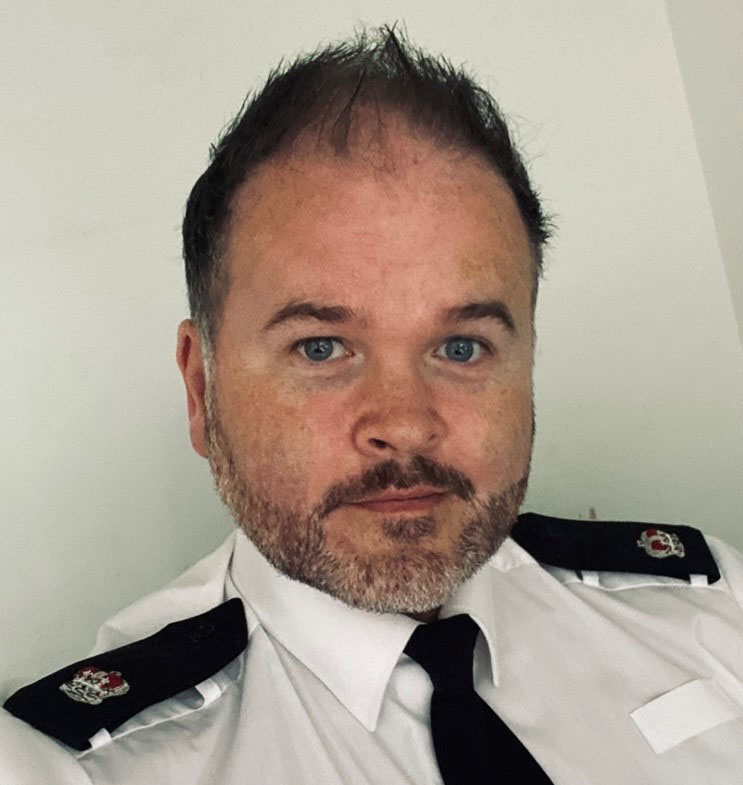
Supt Ross Campbell

I enjoyed being a police constable, but there were aspects of my role I struggled with, including the paperwork and taking statements. I knew I wanted to progress and I aspired to a leadership role. Unfortunately I failed my first attempt at the sergeants’ exam. I failed part two of the OSPRE exam four times! It was perseverance that kept me going. Each time I failed, I was able to learn from the experience and apply that learning to each new attempt. I was successful in the end, after five attempts.

I didn’t know I had dyslexia then, but I knew there was something that wasn’t quite right. My reading speed was slow and I often found words confusing. I’d never read a book from cover to cover. I also had problems with direction and found it challenging to distinguish left from right. These are traits that I now know are common to dyslexia, but I didn’t have this understanding until the time came for me to pursue promotion to Inspector. On my second attempt at the promotion board, my memory went blank and I lost track of everything I had wanted to share. I just sat there staring into space and I had no idea I was doing it. At that point, I had been a temporary inspector for four years, acting up in the role for that time as there had been no promotion boards. I had a wealth of skills, abilities and experience that I knew would make me an effective inspector, as I had proved that in doing the role for so long. It was incredibly frustrating to be experiencing working memory difficulties at such a crucial time.

Fortunately, the chair of the panel was aware of dyslexia having supported a relative with the condition. On their advice, I looked into the possibility that I might be dyslexic.
My journey accessing formal diagnosis was unfortunately very difficult. Initial screening tools offered by the Force gave contradictory results. I was eventually able to have a clinical assessment, which confirmed my diagnosis. Getting the diagnosis was a very emotional experience. On the one hand, I was thrilled to get the clarity that a diagnosis can give you. On the other hand, I couldn’t help but feel regret over the opportunities I’d missed and how my experiences might have differed, if only I’d known about my dyslexia sooner. I had lived my life and my policing career thinking I was not good enough, and I saw others around me flourish when I struggled. At times, every day was a battle with my own mind.

At that time, policing had little awareness or experience of supporting people with dyslexia. There was disagreement in my Force over accountability for support between Occupational Health and Human Resources (HR). An Access to Work assessment made a number of adjustment recommendations to help remove barriers at work, but there were no policies in place for adjustments for dyslexia. Questions arose around budgeting and there were technical difficulties around assistive software compatibility with Force systems. It was clear from the outset that there was a distinct lack of organisational understanding of dyslexia and how to support dyslexic colleagues.

Talking to colleagues nationally through networks I had begun to build, I identified that this was not an isolated issue. It took 18 months for my adjustments to be put in place. It was a stressful and difficult time, and I wanted to ensure that no one else would encounter the same challenges. I started to get involved in supporting Force awareness and capability around dyslexia inclusion. I took an active role in developing dyslexia policy, processes and practices, and I began a neurodiversity network. I presented my own academic research and workforce survey results to HR leads and to the Assistant Chief Constable, making recommendations around adjustments and processes, and the Force was very supportive. Thanks to their pragmatism, we now have effective policies in place to support officers and staff with dyslexia. Initiatives include using work-based assessors and implementing QuickScan and QuickScreen screening tests, as well as interview adjustments.

“Having access to adjustments was key to my successful promotion to Chief Inspector”

Supt Ross Campbell

I was able to access adjustments for my next Chief Inspector promotion board. It was quite surreal to personally experience the adjustments that I had been able to put in place to support others. The process highlighted how important it is that an organisation works with the individual to consider what adjustments might be helpful and that any potential adjustment should be agreed by the individual affected. Implementing an adjustment without that collaboration and with no consideration of a person’s needs is unhelpful and counterproductive. I worked with HR to introduce appropriate adjustments: I agreed to have three minutes per question during the interview to review the question and consider my answer. It was an option to have the questions beforehand with time to consider them, but I wanted to do that one by one in the interview. I was listened to and supported around my needs. The adjustment removed the need for immediate recall that the traditional interview format demands and gave me the time I needed to consider my answer. Having access to adjustments was key to my successful promotion to Chief Inspector.

My career has gone from strength to strength since my diagnosis. I have obtained qualifications in leadership and management, business administration, and coaching and mentoring. I enrolled to study part-time for a distance learning degree in policing. I graduated with first class honours in 2018. In 2019, I was awarded a College of Policing bursary and have just completed my master’s degree in criminal psychology. This complements my role as a hostage and crisis negotiator. I am now a Superintendent and Head of Digital Services at Warwickshire Police.

Adjustments allowed me to work to my strengths and helped to remove barriers to my success. Feeling listened to, valued, supported and understood also had a massive impact on my confidence. Dyslexic officers and staff have made – and will continue to make – an invaluable contribution to policing. This is something that should be celebrated, due to our out-of-the-box thinking and our natural attention to detail. It’s important to have an inclusive work environment and effective policies that allow dyslexic officers and staff to make this contribution and to unlock their potential.

I had never been successful on the first attempt in any process I had gone through. To date, I have sat eight promotion boards for four ranks. Resilience and perseverance have got me to where I am today. Hopefully, the advances in awareness and support – and in particular, workplace adjustments – will mean that these challenging experiences will be a thing of the past. ∎

Superintendent Campbell is an active campaigner for dyslexia awareness and inclusion. You can follow him on Twitter at @dyslexic_cop

This blog was originally published as part of the College of Policing Workplace Adjustments Toolkit – it is reproduced here with kind permission of the author

The benefits of diagnosis

by Daley Jones
Co-Chair/Co-Founder | Metropolitan Police ADHD Alliance

I am writing this blog following a conversation with my ADHD coach. I was telling her how I have often struggled to quantify the positive effects my ADHD and dyspraxia diagnoses have had on my life, and the ‘assistance’ that has followed. What flowed from that conversation is effectively what I am writing.

I’d like to be clear on a couple of points. Although I am talking about my diagnoses for neurodivergent conditions, the positive effects I mention could easily apply to any diagnosis, disability or condition.

I should also add: as always, I can only talk about my own personal experiences. Everyone reacts differently, and feels differently following that moment where someone says, “You have x”.

Diagnosis
The day I was diagnosed was, no exaggeration, one of the best days of my life. At age 36 I was told I had combined ADHD. At 37 I was told that I was also dyspraxic.

Throughout my life I have struggled – be this in school, university, work, or even in my social and leisure activities. In my previous blog I described those struggles in a bit more detail. However, the struggles themselves have caused me to have very poor self-esteem, and a very poor view of my self-worth. In most situations in life, my default position has always been a variation of “You cannot do this thing, you are incapable” which invariably leads to “You are an idiot/lazy/stupid/selfish/don’t care”.

When I realised that there was a reason for these struggles – a reason I was born with, that is a part of me, that is inherent in how my brain operates… it was liberating. I could finally say “It’s not your fault” which leads to “You are not (insert negative word here)”.

In turn, I now think, “OK, how can this situation be explained/demonstrated differently in order for my mind to understand it”. The more I have learned about both my conditions, the more I have been able to create understanding, strategies and coping mechanisms to help me.

Being able to explain why I struggle has also allowed me to explain this to my loved ones, friends, colleagues and bosses. If they understand, they will be in a better and more informed place to ultimately help me.

From a professional, almost HR perspective, being able to point to a diagnosis means that – God forbid I ever got into trouble at work – I would be able to point to my diagnosis and the protections I am afforded under the Equality Act.

You have a right to not disclose a condition to your employer. But think long and hard about this, and ask yourself: will my employer support me fully if they don’t know about my condition?

Accessing help – I will split this into sections:

Medication
I appreciate for many this is almost a ‘dirty word’ – I think society has created an unfair picture that to be ‘on pills’ is a bad thing. I think of it differently: if you had a serious muscular injury, you would go and seek help from a physiotherapist or osteopath. Therefore why should your brain be any different?

Many people point to the side effects of medication. Whilst all drugs will have side effects, I’d argue so does caffeine, nicotine, and alcohol. I urge you to look at the potential side effects of paracetamol next time you pop one with a headache – it’s quite the list!

My ADHD medication has helped me immeasurably: it allows me to focus and get things done, and it brings clarity to my day-to-day life. My partner tells me it has made me “more thoughtful” – I think I was always thoughtful. The issue was engaging the right thoughts at the right time!

To get to the point I am at now with medication, I went through a lengthy process called ‘titration’. Titration is quite simply the process used to determine that I was on the right medication and the right dosage. Throughout the process, I was in regular contact with a nurse who got me to give feedback on how the medication was affecting me. I had to regularly record my blood pressure (I was sent a free monitor) and also give my weight. At any time if I was unhappy with the medication, I could have dropped my dosage or even tried a different type of drug. My point here is that it is well worth trying medication, and if one particular drug doesn’t work for you, be mindful there are others, with different dosages and different methods of use. (I take one pill daily, every morning – you can take a split dose, i.e. one pill in the morning, and one in the afternoon.)

However, if medication isn’t for you, there are alternatives.

Reasonable (workplace) adjustments
It is important at this stage to add that you do not need a formal diagnosis to ask for reasonable adjustments at work. If you are awaiting a diagnosis, or simply believe there is something work can put in place to assist you, you have every right to ask for assistance in the form of ‘reasonable adjustments’.

However, if you are diagnosed with a condition, the likelihood is that you will be legally entitled to reasonable adjustments at work under the Equality Act. This powerful piece of legislation states that it is an employer’s legal obligation to make these adjustments to allow you to do your job.

As I stated at the start of this article, I am diagnosed with ADHD. Under the Equality Act this is covered under the definition of a ‘disability’. Do I feel disabled? No. Do I believe that in the eyes of the law I am disabled? Yes. I found this definition which explains my answer:

“A disability is any condition of the body or mind (impairment) that makes it more difficult for the person with the condition to do certain activities (activity limitation) and interact with the world around them (participation restrictions).”

This accurately sums up my feelings: much like ‘medication’, I am acutely aware of the negative connotations that arise from the word ‘disabled’. But I have made the decision to embrace my disability. The main reason being, it is not my fault I am disabled. I was born with my neurodivergent conditions, and was born into a world with structures that do not cater for the way my brain works – school, higher education, work and public perception.

I am more than capable of achieving the same levels of work and productivity as my ‘non-disabled’ colleagues – I just need things in place to ‘even the playing field’. I urge others, no matter what their disability is to think the same. I am going to endeavour to embrace my condition, and the advantages it gives me over my colleagues. Diagnosis, and the understanding it has brought me, allows me to do this. I now see that I am a round peg, who has spent his life trying to insert himself in square holes. I am now aiming for round holes, even if it will need adjustments to make the hole a bit more rounded.

Reasonable adjustments start with a conversation between an employee and their manager. The manager should ask themselves “how can I make my employee’s working life easier” in order for the employee to achieve their best at work. Although employees can have assistive software and hardware, it is often the little changes that can be made at work that have the greatest effect.

Each person’s condition is unique, and will affect them differently. This is why it is hard to produce a universal list of reasonable adjustments. However, a common example of a reasonable adjustment a line manager could action is to allow a staff member with ADHD time to focus on a task their mind finds ‘boring’. If you wanted a staff member to write up a case file, could they be allowed to complete this task working from home, or in a quieter area of the office? Whilst they are doing this task, could the manager try and limit the amount of calls, emails and other requests they receive? It’s a simple example, but these adjustments are potentially a massive help to a neurodivergent staff member.

Beyond these ‘line manager to staff member’ adjustments, hardware and software can be requested following consultation with Occupational Health and the Workplace Adjustments team. Reasonable adjustments can also be requested for exams (e.g. NIE, promotion) and for interviews for a new role. I received reasonable adjustments for both my Sergeant’s exam and a recent job interview I had.

Access to Work
Diagnosis also allows me to receive support via the Access to Work scheme. This is a Government initiative run by the Department of Work and Pensions (DWP): after applying, a workplace assessment will be carried out. From this, a report is generated with recommendations around how an employee can be supported in the workplace. A list of recommendations is drawn up, along with the various different companies and groups that provide them. The cost of these various things is shared between the DWP and the employer.

I have personally received funding for 24 hours of ‘workplace coaching’ with a qualified ADHD coach/counsellor. I have an hour-long session every week with my coach, in which we discuss strategies and mechanisms to help me with the work I have. As my coach is also a qualified counsellor, she has also helped me to change my negative mindset around situations at work and in life. I cannot begin to tell you how immensely helpful this has been for me.

I also have funding for various pieces of assistive software. As it happens the MPS has licences for many of these already.

Access to Work can also provide grants for ‘hardware’, e.g. special chairs and desks to help you work in comfort, and equipment such as noise-cancelling headphones. They can even help fund means of transport to get you into work.

You have no obligation to disclose your condition to work (unless it potentially endangers your or a colleague’s wellbeing), and there are still negative connotations and stigma attached to ‘disability’, ‘medication’ and many of the various illnesses and conditions that exist.

But I implore you: get diagnosed, first and foremost for yourself. Fight for your rights and fight for fair conditions at work. You are not seeking an advantage over others. You are simply asking for a level and fair playing field. ∎

This blog was originally published on the Metropolitan Police Service intranet – it is reproduced here with kind permission of the author