The Police Service’s Search for Diversity and Inclusion
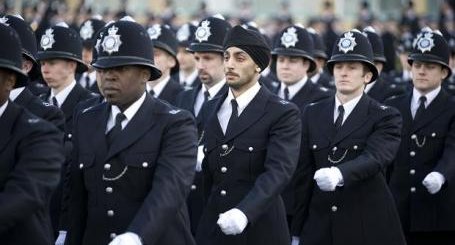
Brian Langston, retired Assistant Chief Constable and former member of the NBPA Executive writes that the current quest for representative ‘identity’ diversity in the police service is misguided and unachievable and it should be replaced with ‘cognitive’ diversity.
The Mirror Crack’d
Throughout the whole of my police service from 1980 to 2010, I lived through an obsession with creating a workforce which was representative of the community. Countless millions have been spent on well-intentioned initiatives aimed at making the police service a mirror of the community it serves. Despite an unprecedented number of measures including setting targets for the percentage of BME officers in forces, positive action programmes and more recently, direct entry, the impact has been negligible.
Noble-cause corruption has led to positive discrimination being taken to meet targets and rows continue to abound regarding the actual or perceived lowering of standards in order to increase the diversity of the police service. This has created tension in the workplace and fuelled suspicion within our communities. The results have also been underwhelming. The BME percentage of the police service currently sits at 5.5% compared with the UK population as a whole of 14%. In the Metropolis the community is 40% BME, a level at which the Met, despite its best efforts will never match.
At Chief Officer level ethnic diversity is close to extinction with just 1% of the total within the NPCC from minority backgrounds. Many of the half dozen BME Chief officers are due to retire, with no immediate successors coming in their wake.
Although the situation has improved since the landmark Stephen Lawrence Inquiry in 1999 when 2% of the service was BME compared to 6.5% of the population, it is does not represent a viable return on investment. The police service is chasing a moving target and the gap is widening as the population becomes ever-more diverse.
The Flawed Premise
Why have the collective efforts of one of the greatest ‘can-do’ cultures in public service, failed to solve this intractable problem? It is because the premise upon which it is based in fundamentally flawed. The police do not have to be representative of the community they serve – at least not in terms of ‘identity’ diversity. The concept of having a ‘rainbow’ police service perfectly mirroring the community is unrealistic, unachievable and unnecessary. it is a throw-back to a 1960s view that the way to tackle discrimination is to co-opt minorities into organisations to change attitudes. This may have had some value in the mid 20th century but is an unworkable tactic to deal with the complexity of today’s society.
The search for the Holy Grail of representative diversity is doomed to fail in the way it is currently being pursued. The so-called six strands of diversity have driven police policy for a generation. The government only recognises race, gender, sexual orientation, disability, religion and age as examples of legitimate diversity but this is shallow and superficial and misses the point completely about attitude and what is referred to as ‘cognitive diversity’.
Taking race as an example to illustrate the point. How many of the currently serving BME officers in the UK have specialist language skills, enhanced cultural and religious awareness or high levels of community and victim empathy? The answer: no-one knows because these factors are not considered relevant enough to record centrally – and yet surely it is these very qualities which are considered desirable? Surprisingly neither do these factors form part of the recruitment criteria where the emphasis has been solely on ethnicity.
Will simply having the requisite proportion of police officers of the ‘right’ shade on a government colour chart, really create a better police service? Probably not and yet this has been the government policy for over 30 years, an obsession with melanin over mindset.
Serving Infinite Diversity
How can the ranks of the police possibly represent the full diversity of humankind?
What of the growing numbers of communities from all around the world who are making their homes in the UK who cannot be distinguished by something as obvious as their skin colour? How are the interests of the homeless, the mentally ill, the drug-dependent, the teenage parents, the deaf and partially sighted, the bed-ridden, going to be represented within the ranks of the police? How many other infinite layers of social, political, religious and economic diversity exist in the modern world? Are we really going to chase them too and beat up our police when they fail?
The police services does not need to reflect the community it serves in identity but in attitude. The reason why ethnic minority communities want ethnic minority police officers is because they believe, and not without reason, that white officers are more likely to discriminate against them. If they believed that they would be treated fairly by all police officers, the colour of the cop would be irrelevant in the same way that hospital patients rarely dwell on the ethnicity of their surgeon.
Diversity is more than Skin Deep
Far more relevant is what Professor Scott Page of the University of Michigan calls ‘cognitive diversity’. This relates not to skin colour or other ‘identity’ diversity, but to mental attitude. Cognitive diversity explains why there are thousands of white police officers held in the highest regard by minority communities. These are the people who have high levels of emotional intelligence, self-awareness and empathy. They are able to quickly build a rapport with the person in front of them, regardless of their background and develop a level of trust which transcends the suspicion with which they may initially be viewed.
We have all encountered officers who have this ‘gift’ for breaking down stereotypical social barriers and instilling confidence – and it has nothing to do with race. These are the people you want to turn up when you are in crisis. They are the ones who identify with your situation on a human level. They feel the pain in your heart and shape their service accordingly.
Officers should be recruited on the basis of their levels of emotional intelligence and not on the basis of any of the strands of diversity. To have officers of the right mindset and attitude in the first place, will ultimately obviate the need to represent any minority by adopting quotas. Even if the percentage of BME police officers did miraculously match the national average, there is no guarantee that public trust and confidence would be any higher, because diversity is more than skin deep. If those BME officers do not have the right attitude or cognitive diversity (and it does not come automatically with the skin colour), then we are no further forward.
Emotional intelligence is not a component of current police recruitment and is only currently tested during the selection processes for Chief Officer by which time it is too little too late. This could also explain why emotional intelligence is not found in abundance in the senior ranks of the service at the present time.
Off the Wall versus Off the Shelf
Cognitive diversity allows people to think differently and break away from the mould and shape their service in a way which will enhance people’s lives.
It is the polar opposite to the command and control culture which has dominated the police service for the past century and a half. These are the ‘wicked thinkers’ who are not bound by standard operating procedures but think laterally, creatively and flexibly and tailor a bespoke resolution for specific problems rather than look for a one-size-fits-all solution.
In order to inject much-needed innovation, the service needs to adopt the policy of hiring for attitude and training for skill, but we do not need to start from scratch. The British police service is a world-class organisation in terms of its commitment and dedication to the public. Contrary to popular belief, police officers are not all the same. Within their ranks lies a rich seam of great diversity of thought which is all too often constrained by policy, politics and the press. Ironically their cognitive diversity is frequently inhibited by political correctness leaving them fearful of being accused of the latest ‘ism’.
Even at senior levels, officers are so weary of being under the diversity cosh that they keep their heads down, noses clean, and hope by not mentioning the ‘D’ word, they won’t make a career-limiting gaffe. In fact the opposite is true, diversity should be openly discussed in the streets, workplaces and canteens and not driven underground. It should be recognised for the valuable resource it is, far wider than the traditional approach to diversity, and a source of infinite innovation and creativity. It is the antidote to the often monolithic aspects of the police culture where the status quo rarely yields to originality.
Rather than continue to berate the service for a lack of progress on diversity and set ever more stretching targets, which only serve to dissipate energy, the new Home Secretary should adopt a much broader understanding of the problem than her predecessors have hitherto done. It is time to stop the futile chase of the ‘six identity strands’ and the abandon the mythical quest of a fully representative police service. The service needs governmental support to shake off the shackles and embrace a broader and more meaningful approach, utilising emotional intelligence and cognitive diversity to unleash talent and shape a more responsive service for British society.
Brian Langston QPM LLb(Hons) MBA is a writer and consultant on leadership and diversity. He was formerly Assistant Chief Constable (Operations) for Thames Valley Police and the architect of a pioneering approach to managing community tension and operationalising diversity. He has previously served on the National Executive of the NBPA and the Superintendents’ Association and has been an advisor to the Home Office, the police service and the business community on race and diversity.
This article was previously published on LinkedIn in September 2016. It has been reproduced here with permission of the author.
References:
The Difference – Prof Scott Page, Princeton University Press 2007
Diversity as a source of competitive advantage – Brian Langston, Reading University Press 2004
 A couple of years ago, I learned a startling statistic: the unemployment rate for individuals with some form of autism – often called Autism Spectrum Disorder (ASD) – is estimated to be between 80 to 90 percent. While it’s shameful and disheartening that any subset of people would face such a challenge, what’s even more startling about that statistic is that many of these individuals are simply brilliant people – highly educated, highly capable, detail-oriented, yet unemployed.
 By way of introduction, many people know me as an “autistic officer”. That isn’t meant in any disparaging way, how could it when I often call myself this! I want to use my position as an autistic officer in a positive way to promote the fact that with the right support, people can get on in this organisation. When I started as a police officer in 1988, I didn’t actually know that I was “disabled”. Even when I found out I was autistic, I was surprised to learn that the condition is considered a disability, because for me it is just part of who and what I am. I really only use the word disability now because it’s the lawful way to categorise me.