By Claire Masterton
NPAA Vice-Chair
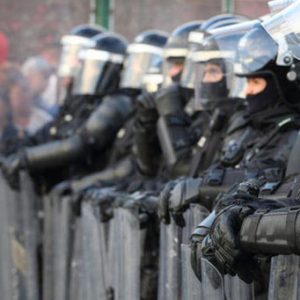 I’m a Sergeant in Police Scotland. I have nine and a half years’ service. A couple of months ago I moved into a departmental role, however until that point I had been in frontline operational policing for my entire career. I’m currently waiting for an Inspector promotion interview, having been supported by line managers and my Senior Management Team for promotion, as – well – competent. I’m a qualified Police Incident Officer. A response driver. I’m public order trained. I do all the things you do every day.
I’m also autistic.
I was diagnosed with Asperger syndrome in 2015, aged 33. I was a Response Sergeant at the time at a very busy station with a team of 13. I’d self-diagnosed a few years before that after happening across an article on Asperger’s and recognising myself in every single aspect described. It was a lightbulb moment – where everything I’d found hard, everything I’d struggled with suddenly made sense. I did some reading and found out more about Asperger’s – that it is is a form of autism – and was happy to leave it at that, just knowing a little bit more about myself, knowing there was an explanation.
Did you know that more than 1 in 100 people in the UK are autistic? That’s over 700,000. There are a lot more males than females diagnosed, although the number of women is rising. There are many reasons bandied about for this, including the argument that girls/women can hide their problems better and are therefore missed or not diagnosed. The National Autistic Society (NAS) describes autism as: “a lifelong, developmental disability that affects how a person communicates with and relates to other people, and how they experience the world around them”. Some people don’t like the term ‘disability’ and prefer ‘condition’, but that’s a blog in itself… To illustrate this for you, I went through my childhood sincerely believing that I must have missed the class at school that taught you how to make friends! Communication issues can be verbal or non-verbal, autistic people famously often struggle with body language or facial expressions – including their own. My Chief Inspector recently spent a day thinking she’d gravely offended me because I didn’t get my facial expression ‘right’ during our conversation – I thought I was portraying ‘interest’ which apparently came across as ‘deadpan angry’!
Autism is regarded as a disability for the purposes of the Equality Act 2010. It’s a lifelong condition: we were born this way, it’s not a disease, there’s no cause and no cure. We’re also all different. I might find things hard that another autistic person has no issue with (albeit we do share some common traits). Autism is often described as a spectrum. It’s meant to indicate that there are many different parts to the condition, however it can leave people with the impression that there’s a straight line between ‘mild’ and ‘severe’ autism. This really isn’t the case, as some people who may not have many problems with one aspect of the condition might be really struggling in another area or might be ‘masking’.
Masking is what we do to appear ‘normal’ – changing our natural behaviours to fit into the neurotypical (non-autistic) world. I do this a lot, and if anecdote is to be believed, so do many on the spectrum (particularly women). I’ve gathered 36 years of experience in the world and I have learned how to behave in social situations. I’ve learned scripts and rules to help me to fit in. I’ve stood quietly at the back of the room until I worked out what to do. I’ve learned that if I smile and laugh a lot it disarms people and they like you. I’ve learned that it’s polite to look at people when you’re speaking to them even though it makes my eyes water and it’s all I end up thinking about, losing focus on the conversation and probably missing important information.
Consider this: I assume many of you learned a language in school. Imagine being told you had to speak that language all day every day at work. You know some words, you can string a few sentences together, and as time goes on you’d get better at it. But it’s tiring, all that concentrating. You miss quite a lot of the conversation and you feel stupid sometimes when all the other people just seem to understand so easily. And when you get home at the end of the day you just want to relax, right? Just go back to your own language, not have to pretend you understand, not have to worry about missing stuff or focus so hard all the time. That’s what masking is like.
Masking got me my diagnosis. As a Response Sergeant I went in every day, dealt with whatever incidents were thrown our way and looked after my team to the very best of my ability. Then I went home and spent rest days totally burnt out, anxious, trying to recover enough to go back for the next set of shifts and do it all again. I got my diagnosis so that I could take it to the Force and ask for help as I recognised that I could not go on like that. At first it was slow going, but my immediate line managers were excellent and gave me a lot of support. There wasn’t a lot I could do on Response in terms of reasonable adjustments, but in my next role as a Community Sergeant I was able to put things into place that helped me greatly, like a flexible working pattern to give me a ‘recovery day’ and minimising my use of the telephone (many autistic people hate the phone).
A diagnosis led me to understand myself, which is the first step to getting other people to understand and accept differences. I know, for example, that I prefer written instructions, and that I’ll follow a conversation much better if I can relax and focus on the words, not worry about how long I’ve been staring at someone to make eye contact. I can explain to people now that I might not look at them, and they know that I’m not rude, or bored. I know that if I have a few different meetings during the day that it’ll tire me out, and that I might speak a bit more slowly sometimes when I’m trying to put complex thoughts into words. I also know that I have many strengths alongside the things I find hard, just like everyone else does. I’ve been able to speak out and help others experiencing similar circumstances.
Contrary to first impressions, policing can be an ideal career for an autistic person. We love rules and routine. I wear the same thing every day and work a shift pattern that doesn’t change. Yes, you need ‘people skills’, but these can be learned, and if you think about it, in almost every interaction an officer has they’re in charge of the conversation. They decide which questions need asked, what information is required. They’re in control (we love to be in control!). Autistic people are often good at taking in vast amounts of information, remembering details, cutting through the superfluous stuff and recognising what’s important. I’ve often amazed (frightened) my team by remembering instructions for an obscure task I read on an email years ago! Getting autistic people into the organisation and progressing them is where we fall down – but that’s a whole other blog…
 Lucy though that no one cared about her, not even her parents who thought she was a disappointment, that someone with an IQ in the top 2% of the population worked on a farm with animals.