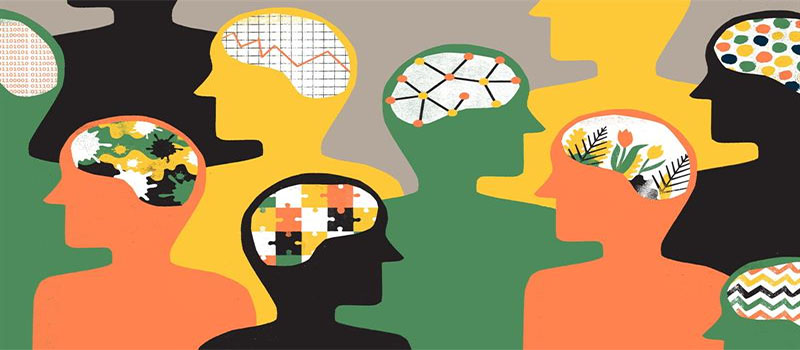
Bridging minds

Empowering neurodivergent and neurotypical officers and staff to create a more innovative and inclusive police service

by James Bird
Detective Inspector & NPAA Coordinator | West Midlands Police
Deputy Secretary | Disabled Police Association

In today’s ever-changing environment, policing has to evolve as rapidly as the communities it serves. It’s not just about responding to new challenges that we face, but also about consistently rethinking how we work, innovate, and collaborate.

That process begins with understanding the strengths of each individual person within our ranks and departments. We’re a service that has always been built from a spectrum of perspectives, each contributing in ways that brings out the best in each other. Or at least it should, if we just know how to apply that diverse thought in the right ways.

When we learn to use these differences in a positive way, our police service won’t just adapt; it will absolutely thrive.

Of course, collaboration between neurodivergent and neurotypical minds has its challenges too at times – and from my experience, collaboration between neurodivergent people and other neurodivergent people has just as many – but it’s really important to address these honestly if we’re going to grow stronger as teams.

In this article, I want to take the time to highlight the importance of recognising this difference, and the strength of understanding for both. Being dyslexic, my own brain is wired only to see similarities, not differences, which has its advantages. It’s sometimes these differences that compliment each other, if appreciated and understood, in collaboration.

Cognitive diversity
Diversity of thought isn’t a new concept: Matthew Syed talked extensively about it in his book Rebel Ideas: The Power of Diverse Thinking, a definite must-read. In the book it examines the power of ‘cognitive diversity’, explaining about how it’s essential to harness unique perspectives to tackle problems.

In simple terms, cognitive diversity is about including people who have different styles of problem-solving and can offer unique perspectives because they think differently, have divergent perspectives, and come from varied backgrounds.

Whilst this can relate to everyone, as you would expect from myself, my main focus in this article, is in relation to neurodiversity.

Neurodiversity – words are important
I’m not really a fan of labelling – we’re all unique and none of us are the same but unfortunately, it’s a human tendency to ‘label’ others. It reflects the need to understand the world efficiently. When used thoughtfully, labels can create support, connection, belonging and clarity; but when overused or misapplied, it can create barriers and limit an individuals’ potential.

I think that at this point in the article, it would be a useful opportunity to provide a very quick explanation of what I’m talking about.

Neurodiversity, simply put, is the concept that people will inherently think, talk, move and act differently. So, for instance, the teams and departments you work in would be ‘neurodiverse’. It can also encompass other reasons why people would think differently, such as race, age, culture, social upbringing, experience and so on.

‘Neurodivergent’ however, refers to people who are less typical in their cognitive variations and includes more well-known examples such as ADHD, autism, dyspraxia, dyslexia, dyscalculia, Tourette’s etc.

Finally, we have the word ‘neurotypical’, which describes those people who have a more typical cognitive function.

All are unique, and all have value. So why is this important in terms of working together?

An example: neurodivergent individuals – those whose brains function in ways that can differ from social norms – will often bring a spark of creativity and innovation. Yet this unique viewpoint can sometimes come across as single-mindedness or a preference for doing things differently, which can be unfortunately misinterpreted as self-centeredness.

On the other hand, neurotypical colleagues may prefer structure and teamwork, sometimes finding it challenging to work with those who may disrupt traditional methods of problem-solving.

This dynamic can create friction, but friction is something that can polish and refine when handled well. The key to all of this, is supporting a culture where each team member, neurotypical or neurodivergent, understands and appreciates what the other brings.

Recognising the power of diverse perspectives
The police service’s greatest asset is its people, and those people bring an incredible array of strengths that go well beyond just rank or role. Neurodivergent people will often approach challenges in ways that are distinct, bold, and insightful. They may notice patterns or connections that others overlook, allowing them to find fresh solutions to longstanding issues. When we need policing to adapt quickly, this creative edge can make a critical difference.

Imagine a neurodivergent officer or staff member tasked with solving a complex crime trend, where others may see just routine: they might notice subtle shifts in behaviour, or spotting a pattern that leads to a breakthrough.

But just as critical is the role of neurotypical colleagues. Their strengths in organisation, team structure, and process-driven thinking provides the steady framework that makes it possible to turn those innovative ideas into practical solutions.

Neurotypical officers and staff are often good at the disciplined follow-through that ensures no detail is overlooked, no idea left in the theoretical. They know how to translate big ideas into action plans, to harness the energy of creative thought and make it into something lasting and effective.

For instance, they might take that breakthrough insight from a neurodivergent colleague and work out the logistics to bring it to fruition, coordinating with other departments or outlining a step-by-step approach for the team to follow.

In this way, we can easily see that these two perspectives aren’t just compatible – they’re complementary, if we are willing to accept it.

Neurodivergent colleagues can provide the vision, while neurotypical colleagues can provide the structure. Together, they bring a full range of skills that allows us to address challenges from every angle, from brainstorming to implementation.

Facing the challenges honestly
This journey toward collaboration isn’t going to be without its obstacles and barriers though. For neurodivergent officers and staff, the intense focus that fuels their creativity can also make it challenging to engage in group dynamics or consider other viewpoints.

At times, this can look like they only think of themselves or won’t accept other views, as neurodivergent colleagues become so immersed in their ideas that they find it hard to step back. This intensity, while a source of innovation, may occasionally lead to conflict within teams where collaboration and compromise are valued.

Likewise, neurotypical colleagues, accustomed to a straightforward approach to problem-solving, may sometimes see unconventional ideas as just unnecessary disruptions. Used to working within clear structures and set processes, they may have trouble understanding the more effortless, and spontaneous approaches that neurodivergent minds bring to the table.

But this friction isn’t just a flaw in our system; it has to be part of the learning process. The discomfort that comes from blending different perspectives is where the growth will happen.

To really harness our potential, we have to all start with self-awareness.

Neurodivergent officers and staff can build on their strengths by practicing flexibility, by intentionally stepping back from their own ideas to make room for others and by seeking to understand how their contributions fit within a larger framework.

Equally, neurotypical officers and staff, can bring a greater appreciation for diversity in thinking by approaching unconventional ideas with curiosity and help develop them.

For neurodivergent colleagues, this close working can help us understand that in all reality, not everything we experience at work is due to our neurodivergence; some challenges are simply part of being human. Collaborating closely with neurotypical colleagues can be a valuable reminder of this.

Neurotypical perspectives help neurodivergent individuals see that stress, miscommunication, or even self-doubt are common experiences shared by everyone, not just those who think differently.

Working together provides us with an insight into where neurodivergence plays a role and where universal human emotions come into play, creating a clearer understanding of which challenges stem from neurodivergence and which are shared experiences across the team.

Similarly, one thing that rarely gets discussed is that the coping mechanisms such as assistive technology, accessibility tools and other processes neurodivergent colleagues need to utilise as part of their own day-to-day activities, will often help neurotypical people as well.

Both sides can benefit from this mindset of empathy, openness, and emotional intelligence, recognising that both perspectives are vital to our shared success, policing mission, and Peelian principles.

“Our differences are our greatest strength.”

Neurodivergent collaboration: strength in shared understanding
I’m not going to write this article just talking about the need for neurodivergent people to work collaboratively with neurotypical people, whilst ignoring the fact that it’s probably a greater and more unique challenge in itself to get neurodivergent people, who all experience the world differently, to actually work with other neurodivergent people. I’ve had plenty of first-hand experience of this.

When neurodivergent colleagues work together they can often find the common ground in their approaches to work, allowing them to connect over unique thinking styles, experiences, and challenges. They may bring out the best in each other through mutual understanding and a willingness to engage in less conventional approaches.

However, neurodivergence is often about contradiction. Those neurodivergent strengths will also inherently have an equally contradictory linked challenge, as they will often have diverse preferences for communication, organisation, and focus even amongst themselves.

For example, some may hyper-focus intensely on one task, while others may jump between multiple ideas. This can lead to misunderstandings, particularly if each person has a different approach to managing their workload, speeding through a project, or bringing about joined up change.

Additionally, neurodivergent colleagues may hold strong views or specific ways of doing things, making it essential for each person to approach teamwork with patience and adaptability. And this working together is a perpetual challenge, even with a clear and simple common purpose.

To collaborate effectively, neurodivergent colleagues can support each other’s growth by recognising when to step back from their own viewpoints and consider another colleague’s approach. This willingness to exchange perspectives will create a resilience and a team that is not only adaptable, but also cohesive.

Neurodivergent collaboration can become a process where they can inspire each other to reach beyond their perceived limitations, proving that neurodivergent minds can not only work together but thrive together, where diverse talents and approaches are valued.

Building an inclusive Service, together
I want you to think about the potential for teamwork where neurodivergent colleagues bring their out-of-the-box thinking to tackle emerging challenges, while neurotypical colleagues provide the steady support that keeps those ideas grounded.

The interaction can be powerful, transforming what might seem like competing approaches into a dynamic team.

Unfortunately, this learning from each other doesn’t happen overnight – if at all – but it’s one of the most rewarding aspects of the work that I, and many great people who I have had the absolute pleasure to work with in policing, have experienced.

Neurodivergent colleagues can gain greater adaptability by working alongside neurotypical colleagues who excel at process and follow-through. Likewise, neurotypical colleagues can develop a more open-minded approach by witnessing the creative problem-solving and persistence of their neurodivergent peers.

This exchange doesn’t just benefit the individuals involved, it strengthens the entire service, creating teams that are more resilient, innovative, and responsive.

By opening up to this concept – whether neurodivergent or neurotypical – we can gain so much.

Each person has something to learn from the other, and that learning supports a shared purpose that’s essential in policing. When neurodivergent and neurotypical colleagues are encouraged to collaborate, they create feedback and best practice evidence and loops where ideas are shaped, refined, and ultimately implemented with the input of both perspectives.

This process allows for a constant flow of insight and improvement, building teams that are adaptable, resourceful, and capable of facing any challenge.

Leadership’s role: setting the stage for collaborative success
The role of leadership in creating an inclusive and collaborative environment cannot be overstated. Leaders set the tone, create the expectations, and provide the support that allows neurodivergent and neurotypical officers and staff to work together effectively. It’s so important for neurodivergent senior leaders – and there are a large proportion of them – to feel empowered to be open and share their experience, providing that support.

To bridge the gap, leaders must support and nurture a work culture that values diverse perspectives and promotes respectful, open communication.

One powerful way to do this is through inclusive leadership coaching programs that build empathy and understanding. It shouldn’t just be about teaching staff to ‘tolerate’ differences; it should be about bringing the best out of them and helping them see value in those differences.

It also should be mentioned it’s not just about training; just being a good leader in general is important. Leaders can encourage collaborative problem-solving by assigning team projects that bring neurodivergent and neurotypical officers together in roles that complement their strengths.

Imagine a task force where neurodivergent officers are given the creative space to brainstorm solutions for new public safety initiatives, with neurotypical colleagues providing organisational support and managing logistics. This approach not only brings out the best in each individual but also builds a sense of unity and shared purpose that’s essential to effective policing.

Finally, leaders must inspire respectful communication. When a leader demonstrates that all perspectives are worth hearing, that every officer’s insights matter, they send a powerful message to the team. As the saying goes, ‘Leaders who don’t listen will eventually be surrounded by people who have nothing to say’.

This kind of inclusive leadership empowers officers to take risks, voice their ideas, and work through differences constructively. It shows that our service values innovation and inclusivity, not just as ideals but as core aspects of our mission.

Embracing diversity for a stronger police service
At the heart of all of this – and the reason I’ve written this article – is a simple truth: our differences are our greatest strength. Neurodivergent and neurotypical officers and staff each bring perspectives that are not only valuable but essential. Together, we can build a Service that is as diverse as the communities we serve, a service that is better equipped to meet the challenges of modern policing.

Bringing diversity of thought to the front of everything we do isn’t always easy, but it’s one of the most important paths we can take. By embracing each other’s strengths, learning from each other’s differences, and celebrating our similarities, we set a standard for what a truly collaborative and resilient police service can look like.

Our differences aren’t barriers but connections. Building a culture where every officer or staff member, feels valued, heard, and empowered to contribute, won’t just be building a better service; we’ll be setting an example for what it means to serve with integrity, empathy, and strength. ∎

The importance of exercise for neurodivergent people

by Daley Jones
Co-Chair | ADHD Alliance

Been a little while since I’ve written anything. Busy busy busy as per.

Speaking of being busy, one thing that I have been endeavouring to find time for of late is exercise.

Now, I don’t need to say anything about the obvious benefits of regular exercise with regards to people’s physical health. There are plenty of articles out there, written by people far more intelligent (and fitter) than me that will explain all of that.

But what has become increasingly apparent to me is how important regular exercise is to my mental health, and in particular my ADHD and dyspraxia.

Now, like many I’ve always hated running. However, having nothing to do during lockdown (remember that!?) and not being able to take part in team sports (football for me), I decided going for a run was better than doing nothing.

I won’t lie… the first few weeks were bloody awful. I hated every single run. But then one day, quite unexpectedly I found myself enjoying my run. It was such a shock I remember the moment clear as if it was yesterday.

I was running along a canal one morning. It was a beautiful autumnal day, I’d run past some canal boats (cooking bacon, the bastards) and some swans. And found myself thinking “Well, isn’t this nice?”

Me and my bro after running a 10k race

I eventually set a goal of doing a half marathon, which I trained for and completed in June 2021. However, thanks to my good old ADHD… as soon as I completed my goal, my brain said: “That’s it, done now”, and honestly I’ve struggled to get back into running again.

The thing is, my physical fitness massively improved. But what I came to realise, only quite recently in fact was the massive benefit the exercise was having around my ADHD.

There is the obvious point: ADHD man = he like to move.

But what I started to miss was the headspace going for a run gave me. I’d literally have nothing to focus on, or worry about. It would just be me, the road/path/towpath. It was an extremely liberating state of mind.

Then there’s my dyspraxia. I got my ADHD diagnosis first, but I quickly realised the issues I had controlling my big old frame (6’5″ and fairly broad, ladies and gents) and my fine motor skills were causing me far greater self-esteem issues than my ADHD.

It’s always been there. I avoided going to sports day at school. There was an expectation that I’d excel at certain sports like long and high jump due to my size – this was obviously not true. Hop skip and jump: forget it, with my sequencing issues. Javelin and shot put: my force feedback issues prevented me from using the requisite effort. And then there’s one of my life’s great loves: football. I’ve always played football. But it was always apparent there were issues for me that others didn’t seem to have.

Heading the ball? Ha, that requires me to anticipate the movement of the ball, and get my brain to engage my legs to jump with the correct amount of force, move my head back and then forward connecting with the right part of my forehead… NO CHANCE.

What about in goal? Sure, I saved a few shots because I’m a big lad. But judging a low-driven shot? By the time I’d worked out where the ball was heading and processed what I needed to do… the net was already making that satisfying yet galling ripple sound.

The point is – all these perceived failures put me off physical activity.

I recently had the pleasure of speaking to Caragh McMurtry at a neurodiversity speaking event we were both at. As well as being a generally all round lovely person, Caragh Is a former Olympic rower, representing Great Britain and appearing at the Tokyo Olympics. She also happens to have an autism diagnosis.

Caragh McMurty

I urge you to have a look at Caragh’s brilliant website, read her story and find out how she is trying to help neurodivergent athletes and their coaches maximise their potential.

I’ve been lucky enough to have an in-depth conversation with Caragh about the issues I’ve had as a neurodivergent person wanting to get into sport. She really is very inspiring!

She helped me come to the realisation that regular exercise was having massive benefits to my dyspraxic self-esteem. When I was running, I was no Mo Farah, but I was really proud of my achievements. I was getting out moving regularly, and only occasionally crashing in to things (low hanging branches along towpaths have a lot to answer for).

Needless to say, my new levels of understanding around the importance of regular exercise means I am trying to get back into a routine. I won’t lie, it’s proved difficult – primarily due to issues being organised and executive function. But I’ve re-joined the gym and have benefitted from advice from a neurodivergent-friendly personal trainer: the lovely Shelley Rudge.

Shelley explained the weight based gym exercises in a way my dyspraxic brain could comprehend, really listened to my feedback around the ones I found more difficult, and found excellent easier-to-understand alternatives that had the same desired effect. Check out her Instagram.

So, I implore you… Get out there! It doesn’t matter if you aren’t going to look like a young Arnold Schwarzenegger, or be the next Laura Muir. Regular exercise will have such a transformative effect on your mental health, as well as your physical. I just need to start following my own advice on a regular basis! ∎

No pain, no gain… Although it helps me to do exercises my dyspraxic brain can understand!

This blog was originally published on the Metropolitan Police Service Intranet – it is reproduced here with kind permission of the author

Why does diversity & inclusion in the workplace matter?

To mark the beginning of National Inclusion Week 2024, Lincolnshire Police NPAA Coordinator Andrew Woodcock looks at the proven advantages of diverse and inclusive workplaces

My passion and interest through my own neurodivergence is championing awareness across the organisation of neurodiversity. However, my research has led to the wider subject of diverse teams, and their importance and relevance to all the staff networks within Lincolnshire police.

For many years in policing we have been required to undergo diversity training. Much of the focus from this training was initially around race, understandably due to high profile cases such as the Stephen Lawrence murder. Back in 2002, my university dissertation examined the progression of policing following the Macpherson report into the failings identified following the investigation, which identified fundamental issues with institutional racism and police culture.

The impact of Macpherson on public confidence decades later is still felt. More recently policing has gone through a series of further scandals relating to non-disclosure (Liam Allen), misogyny (David Carrick and Wayne Couzens) and also issues over police officers’ conduct on social media platforms such as WhatsApp. Public confidence in policing has taken a massive hit, and this has reflected on a local level in policing across Lincolnshire.

So why am I talking about all this? Here are some key statistics with links referencing the original articles:

  • Diverse teams are 35% more likely to outperform their competitors (McKinsey)
    Although police forces are not in a competitive market, we are inspected and benchmarked against other Forces – so naturally if we have more diverse teams we are likely to stand up better to independent scrutiny.
  • Diverse teams are 87% better at making decisions (People Management)
  • Decisions made and executed by diverse teams deliver 60% better results (Forbes)
    We have to make decisions in policing every day. Some of these decisions will have lasting impacts on people’s lives. Therefore having a diverse team which reflects society is likely to lead to better decisions being made.
    Part of debriefing where things haven’t gone well should consider is the team involved in that situation diverse? Did lack of inclusion in a team and recognition of diversity lead to poor decision making? How can this be rectified?
  • Diverse teams have 19% higher rates of innovation (Forbes)
    It is well documented that Lincolnshire Police is one of the worst funded Forces in the country. This has been the case for decades, despite the determination to change funding formulas which remains ongoing. Building diverse teams is likely to lead to us making more efficient use of our resources – innovation may also even lead to greater resources via the Home Office STAR funding stream.
  • Diversity improves team performance by 30% (Gartner)

How do diverse teams benefit our workforce wellbeing?

  • Inclusion increases employee engagement by up to 83% (Deloitte)
  • Employees who feel their organisation is inclusive are three times more likely to be happy in their job (BCG)
  • Inclusion reduces absenteeism – a 10% increase in perception of inclusion adds one working day per year per employee (Catalyst)

Diversity and inclusion boosts recruitment and retention:

  • 62% of employees would reject a job offer from an organisation with a culture that wasn’t inclusive (People Management)
  • 39% of jobseekers won’t even apply for a role if they don’t consider the organisation to be inclusive (McKinsey)
  • 76% of candidates consider diversity to be an important factor in their choice of employer (Glassdoor)
  • Inclusion increases staff retention by 50% (Harvard Business Review)

As you can see, there is clear evidence that diverse teams impact on external recruitment into policing, and also on internal progression.

Work is ongoing nationally including the recent amendment of the Code of Ethics and updated Competency Value Framework (CVF) to improve representation of neurodiversity in higher ranks.

Having a diverse workforce impacts on whether members of the public may choose to engage with the police and provide information. If the public see the police as unrepresentative, they are likely to be distrusting and less receptive to providing information which we rely on in a policing by consent model. This is most notable in communities across the UK where murders involving gun crime and gangs has been met with a wall of silence.

The inspirational speaker Simon Sinek argued eloquently about why people buy Apple products as an example of the power of ‘communication from the inside out’. (His viewpoint I must add is not universally accepted.)

“Here’s how Apple actually communicates. Everything we do, we believe in challenging the status quo. We believe in thinking differently. The way we challenge the status quo is by making our products beautifully designed, simple to use and user friendly. We just happen to make great computers. Want to buy one? Totally different right? You’re ready to buy a computer from me. All I did was reverse the order of the information. What it proves to us is that people don’t buy what you do; people buy why you do it.”

The Golden Circle: Why Does Apple Command Loyalty?

Here are some figures you need to know about the competitive impact of diversity and inclusion.

Diversity and inclusion increase revenue:

  • Diverse management teams achieve 19% higher revenue (BCG)
  • Diverse companies generate 2.3 times higher cashflow per employee (Deloitte)
  • Diverse companies are 36% more profitable (Gartner)
  • Diverse companies are 70% more likely to capture new markets (Harvard Business Review)
  • Diverse organisations generate a 66% higher return on equity (Deloitte)

Diversity and inclusion attracts customers:

  • Up to 50% of customers’ purchasing decisions are influenced by an organisation’s support for equality (Deloitte)
  • Consumers are four to six times more likely to buy from and champion a brand with a strong sense of purpose (CSR Wire)
  • 57% of consumers are more loyal to brands that commit to addressing social inequalities (Deloitte)
  • 64% of consumers were motivated to take action by an inclusive ad (Google)
  • Inclusive ads increase purchase intent by 23% (Microsoft)
  • 53% of UK people say their purchase decisions are influenced by a brand’s diversity and inclusion efforts (Kantar)

If you’re considering whether diversity and inclusion is a worthwhile investment for your organisation, or you’re trying to make a business case to the senior leadership for diversity and inclusion work, there is plenty of evidence out there to help you.

Please take time from your busy working days to consider these examples and understand how we can all impact on making our teams more diverse. ∎

This blog was originally published on the Lincolnshire Police intranet – it is reproduced here with kind permission of the author